
How to Safely Remove Bug & Insect Residue from Your Car Without Damaging the Paintwork
If you’ve ever driven along a country road or motorway during the warmer months, you’ll know just how quickly the front of your car can become covered in insects.
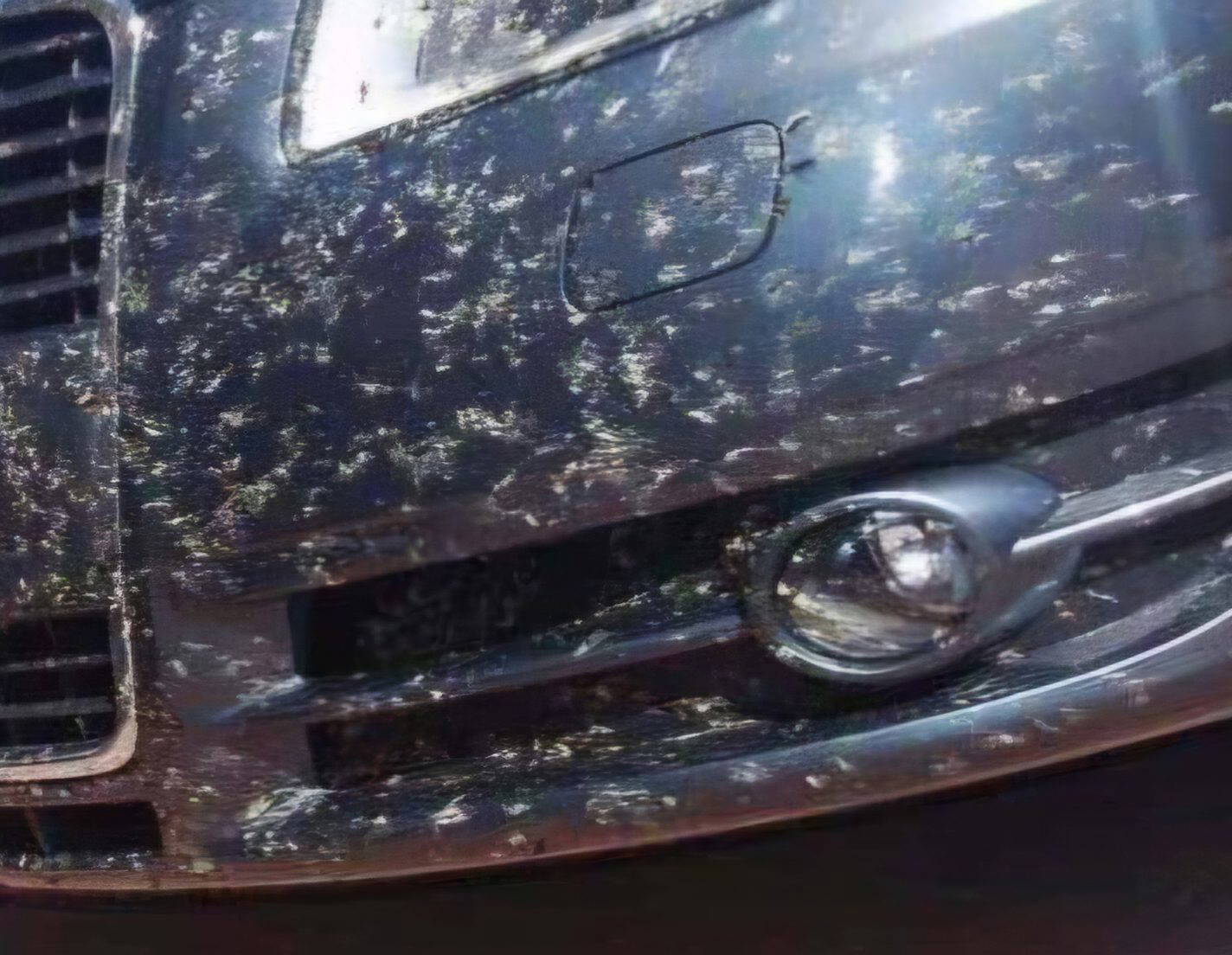
From your front bumper and bonnet to your headlights and wing mirrors, bug splatter can leave your vehicle looking rather messy. While it might seem like nothing more than an inconvenience, leaving insect remains on your paintwork for too long can potentially cause lasting damage.
The good news is that with the right products and techniques, bug residue can usually be removed safely without harming your vehicle’s finish.
How Does Bug Residue Damage Your Car’s Paintwork?
When insects collide with your vehicle, their remains leave behind a mixture of organic materials, including proteins, acids and other compounds.
These substances can stick firmly to the surface of your paintwork, particularly when exposed to heat and direct sunlight.
As the residue dries, it becomes increasingly difficult to remove. In some circumstances, the contamination can affect the clear coat, leaving behind staining, dull patches or even permanent etching.
The problem can become worse during the summer months when your vehicle’s bodywork gets particularly hot. Insect remains can dry rapidly onto the surface, making removal more difficult.
There’s also another potential issue: insect shells and hardened debris can cause fine scratches if they’re rubbed across the paintwork without being softened first.
This is why it’s important to use the correct cleaning methods rather than simply attacking stubborn bug splatter with a sponge and plenty of elbow grease!
How to Safely Remove Bug Residue from Your Car
Removing insect remains doesn’t have to be difficult, but taking a little extra care can make a big difference to the condition of your paintwork.
Here’s the approach we’d recommend.
1. Rinse the Vehicle Thoroughly
Before attempting to remove any bugs, give the affected areas a thorough rinse with clean water.
This helps remove loose dirt, dust and debris that could otherwise cause scratches during cleaning.
Pay particular attention to areas where insects commonly accumulate, such as the front bumper, bonnet, grille, headlights and wing mirrors.
Where possible, work in a shaded area and allow the bodywork to cool before applying any cleaning products.
2. Apply a Dedicated Bug Remover
For stubborn insect residue, a dedicated automotive bug remover is your best option.
These products are specifically formulated to help break down and loosen insect remains, making them easier to remove without aggressive scrubbing.
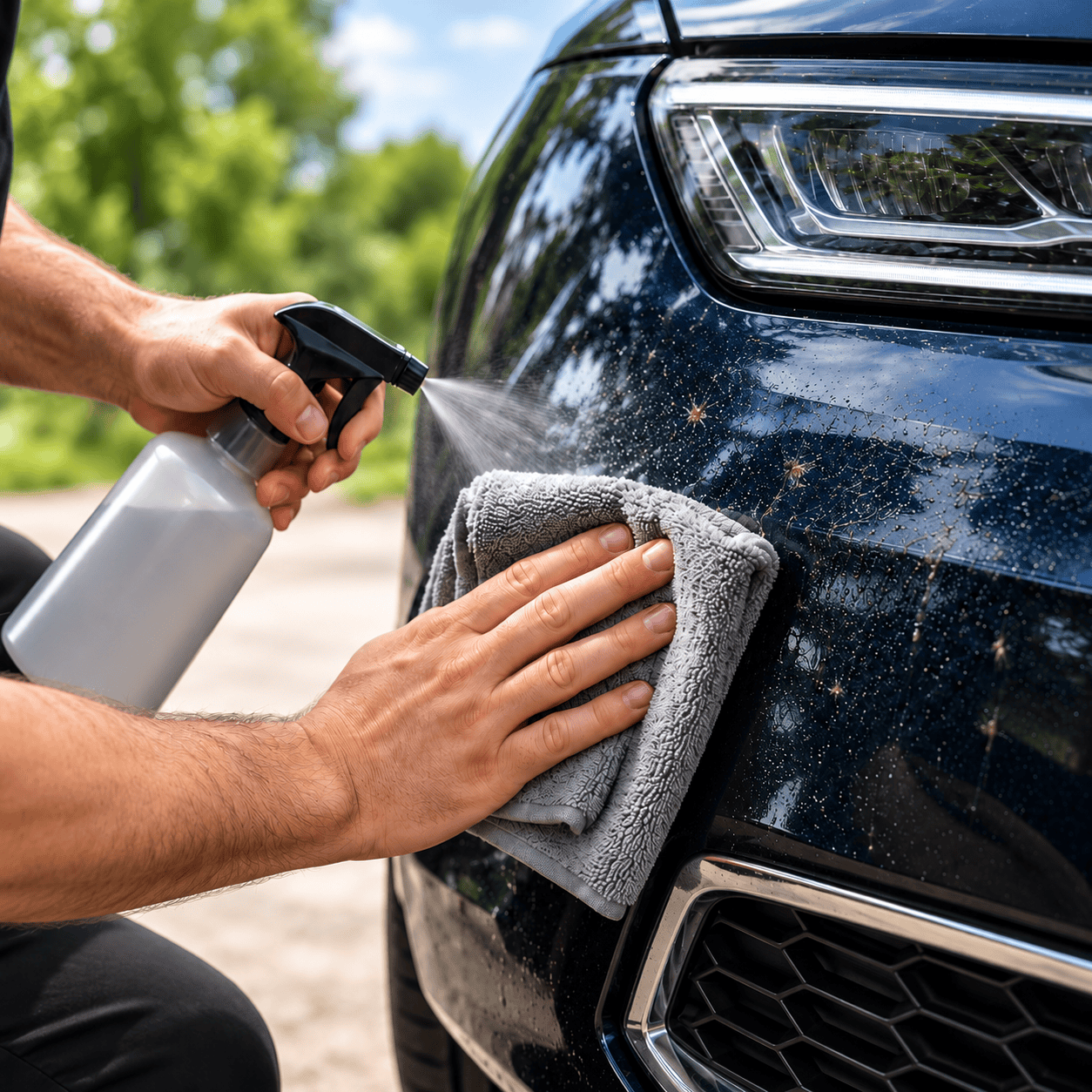
Spray the product onto the affected areas and allow it to work for the recommended amount of time.
Always read and follow the manufacturer’s instructions, particularly regarding how long the product should remain on the surface.
Never allow the cleaning solution to dry on your paintwork, especially in hot weather.
If your vehicle has a ceramic coating or other specialist paint protection, make sure the product is suitable for that particular finish.
3. Gently Remove the Insect Remains
Once the bug remover has had time to soften the contamination, rinse the area thoroughly.
If any residue remains, use a clean, soft microfibre cloth or suitable automotive wash mitt to gently lift it away, keeping the surface well lubricated.
You can also use a dedicated bug-removal sponge, provided it’s designed to be safe for your vehicle’s finish and used according to its instructions.
The key here is to avoid applying excessive pressure or scrubbing at stubborn deposits.
If the insects don’t come away easily, apply more suitable cleaner and allow it to soften the residue again.
It’s much better to repeat the process than risk damaging your paintwork by rubbing too hard.
4. Wash the Vehicle
Once you’ve removed the insect remains, it’s a good idea to wash the vehicle using a quality automotive shampoo.
A suitable pH-neutral car shampoo is ideal for regular maintenance, helping remove remaining contamination and cleaning product residue.
Use a clean wash mitt and plenty of lubrication to reduce the risk of introducing swirl marks.
Rinse thoroughly and dry the vehicle using a clean, soft microfibre drying towel.
5. Protect Your Paintwork
After cleaning, consider applying a suitable layer of paint protection.
Car waxes and paint sealants provide a protective barrier that can make future insect deposits easier to remove.
A professionally applied ceramic coating offers longer-lasting protection, creating a surface that helps reduce the build-up and adhesion of everyday contamination.
However, it’s worth remembering that no paint protection product makes your vehicle completely immune to damage.
Even if your car has been ceramic coated, you should still remove insect remains as soon as reasonably possible.
What Happens If Bugs Have Already Damaged Your Paintwork?
Sometimes, even after successfully removing all the insect residue, you might notice faint marks, staining or dull patches remaining on the paintwork.
This can indicate that the contamination has affected the clear coat rather than simply sitting on top of it.
Depending on the severity, professional machine polishing or paint correction may be able to improve or remove these marks, helping restore the original gloss and clarity.
However, if the damage is particularly deep, polishing alone may not be enough. In more serious cases, refinishing or repainting the affected panel could be necessary.
Fortunately, such extensive damage is not inevitable, and dealing with contamination promptly can greatly reduce the risk.
Prevention Is Better Than Correction
While it’s impossible to avoid every insect on the road, especially during the spring and summer months, there are a few simple things you can do to help protect your vehicle.
Regular washing prevents contaminants from building up, while applying a wax, sealant or ceramic coating can make future cleaning much easier.
If you’ve been on a long motorway journey or driven through areas with lots of insects, it’s worth checking the front of your vehicle when you get home.
Removing fresh bug splatter is generally far easier than trying to tackle dried-on remains several days later.
The same principle applies to bird droppings, also known as bird lime. These can also damage paintwork when left untreated, particularly during warm weather.
Whether it’s bugs, bird lime or other environmental contamination, the sooner you remove it safely, the better your chances of keeping your paintwork in excellent condition.
Want a professional to take care of it?
If you have bug and insect residue on your car and want it professionally cleaned, Lomax Valeting is on hand. At Lomax Valeting, we offer professional mobile car valeting, detailing and paint correction services to help keep your vehicle looking its best.
Based in Bourne, Lincolnshire, we cover Stamford, Market Deeping, Peterborough, Spalding and the surrounding areas.
Whether your paintwork needs a thorough clean, additional protection or attention to existing marks and imperfections, we’re happy to offer advice on the most suitable treatment.